

The 5 Best Billing Software for Therapists in 2026


We reviewed and compared the five best billing software platforms for therapists to help you find one that prevents claim denials, reduces manual data entry, and connects directly to your clinical workflows.
This guide breaks down what each platform does well, where they fall short, and why integrated systems like Passage Health are replacing disconnected billing tools.
Best billing software for therapists: At a glance
1. Passage Health: Best billing software for ABA therapists and clinics
What it does
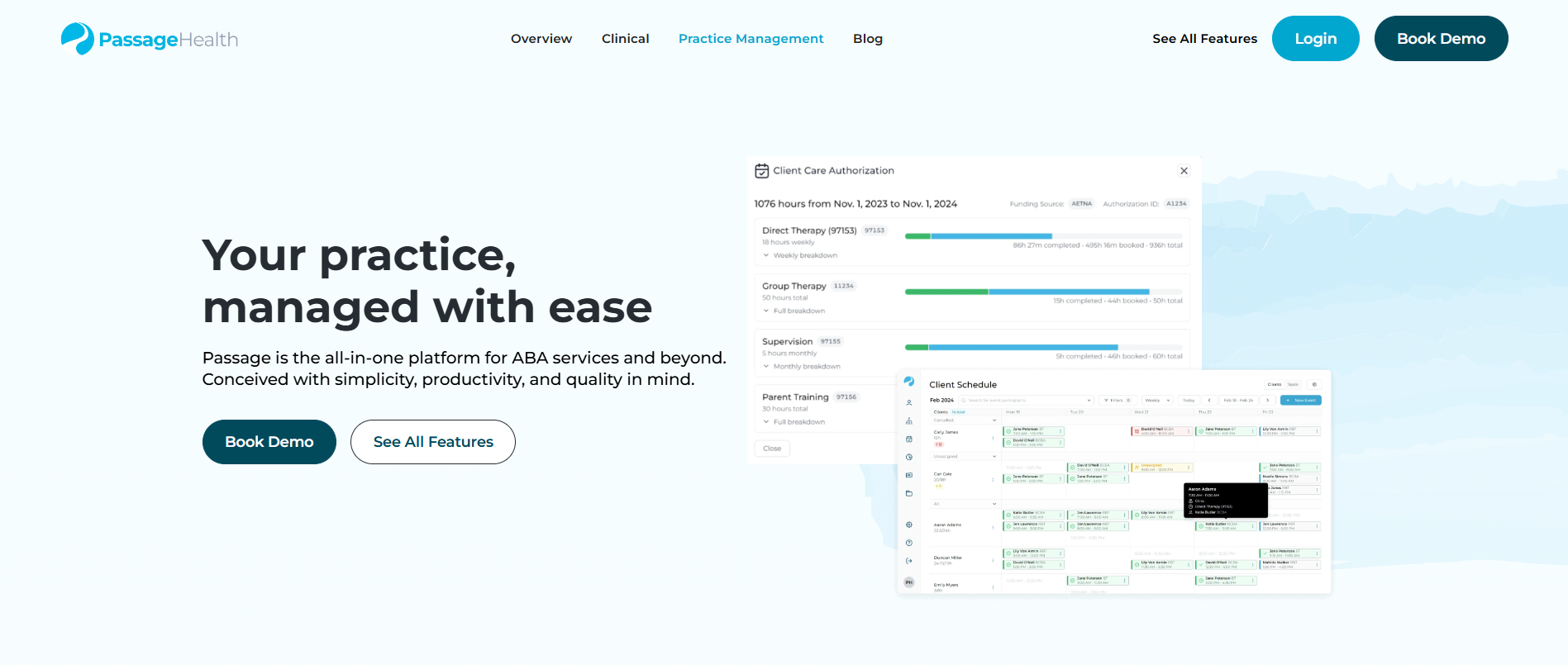
Passage Health is an all-in-one clinical and practice management platform that connects billing directly to scheduling, session notes, and authorization tracking.
Who it’s for
Passage Health is built for ABA practices and autism therapy clinics that want fewer billing errors, faster payments, and billing accuracy without the extra layers of admin.
It stands out from other platforms because billing doesn't live in a separate system. Your session data, notes, authorizations, and claims are all kept in one handy place.
When scheduling and billing are separate, small mismatches can add up (like rescheduled sessions with outdated codes, credential changes that don't sync, or authorization limits that nobody catches). But Passage Health prevents these problems by linking billing directly into your clinical workflows.
Key features
- Billing tied to sessions: Claims reflect what actually happened in sessions because billing pulls directly from session notes.
- Authorization tracking: Shows how many authorized hours remain to keep you billing past approved limits.
- Automatic credential matching: Matches services to provider credentials automatically so claims have the right qualifications behind them.
- Real-time claims tracking: Submit claims directly to insurance and see immediate updates on rejections or denials.
- Automatic billing records: Sessions automatically fill in billing records with the correct provider, Current Procedural Terminology (CPT) codes, and client information.
- Multi-location billing: Keeps workflows consistent, even when billing across different clinic locations.
Pros
- Fewer denials caused by documentation mismatches
- Clear revenue visibility without needing to export to spreadsheets
- Great for scaling at growing practices
- Authorization limits are enforced before claims go out
- Dedicated onboarding support
Cons
- Not designed for cash-only practices that don't bill insurance
- Best value shows as volume increases
Pricing
Custom pricing based on practice size and needs. Contact Passage Health for a quote.
Bottom line
If billing feels disconnected from care delivery, Passage Health fixes that at the root. It's the strongest option for therapists who want billing accuracy without adding administrative layers.
You can book a demo with Passage Health to find out more.
2. SimplePractice: Best for solo therapists

What it does
SimplePractice is widely used in private practice. Setup is fairly quick, the interface looks clean, and billing works well for practices that have straightforward needs.
Who it’s for
Solo clinicians who want something familiar and quick to launch.
Key features
- Insurance claims submission: Submit claims electronically with built-in payor connections.
- Client invoicing: Generate and send invoices directly to clients.
- Payment processing: Accept online payments through the platform.
Pros
- Large user community
- Simple interface
- Wide payor support
Cons
- Billing workflows don’t adapt well as volume grows
- Limited authorization intelligence
Pricing
Starts from $99/month.
Bottom line
SimplePractice works well early on, but some practices find they outgrow it once their billing complexity increases.
3. TherapyNotes: Best for documentation-first practices
What it does
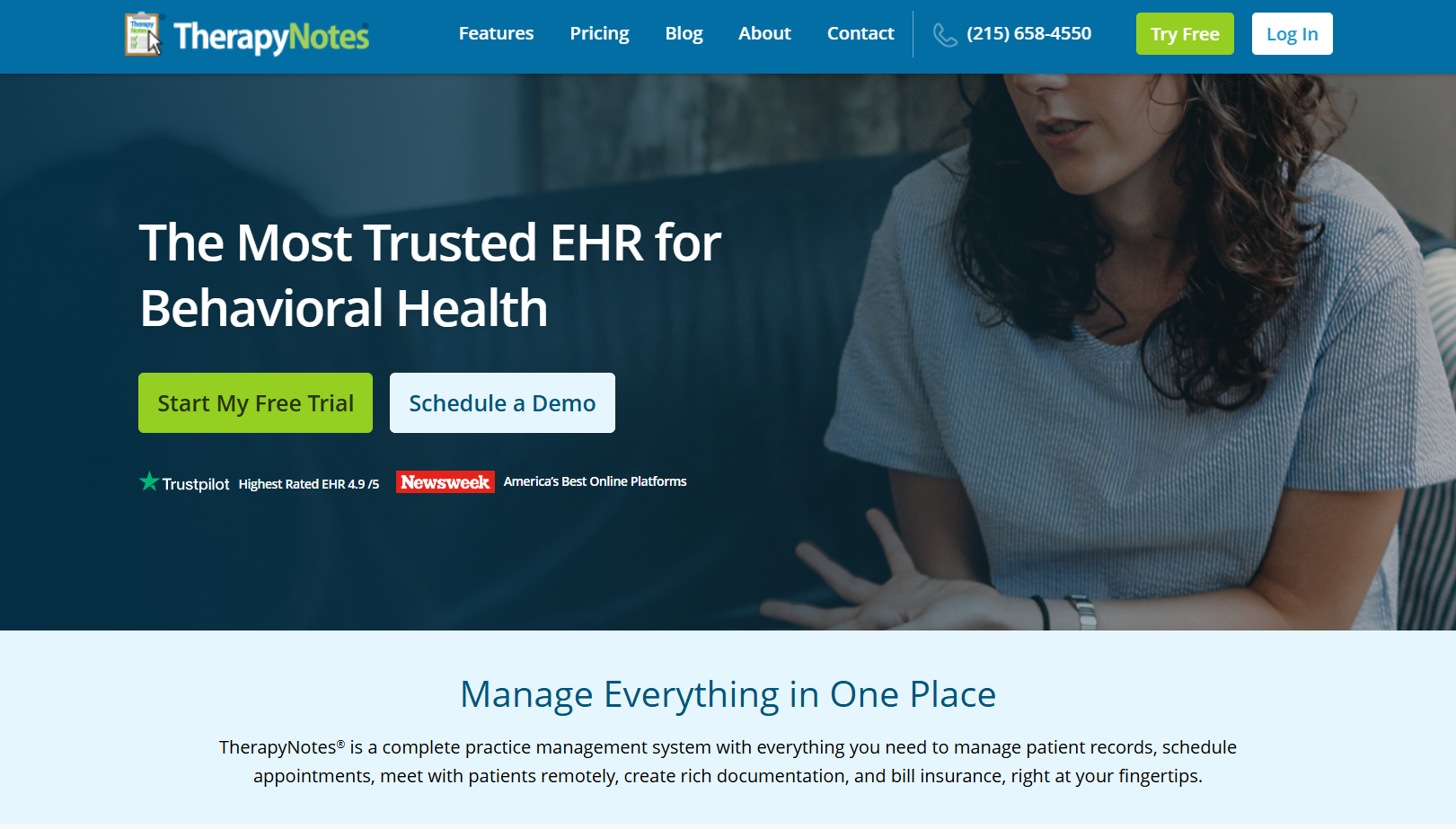
TherapyNotes is an Electronic Health Record (EHR) system with integrated billing that’s focused on structured clinical notes and compliance.
Who it’s for
Therapists who prioritize thorough documentation and clear audit trails.
Key features
- Structured note templates: Pre-built templates for different session types and treatment approaches.
- Built-in billing and claims: Electronic claims submission with insurance tracking.
- Strong compliance tools: Clear audit trails that track who accessed or changed records and when.
Pros
- Strong note quality control
- Helpful audit trail for compliance
- Reliable billing tools for standard workflows
Cons
- Less customization and flexibility for billing
- Interface feels too rigid for some users
- Steeper learning curve for new staff
Pricing
Starts from $69/month per clinician.
Bottom line
TherapyNotes works best if structured documentation is your priority and your billing needs are straightforward.
4. TheraPlatform: Best for telehealth-focused practices
What it does
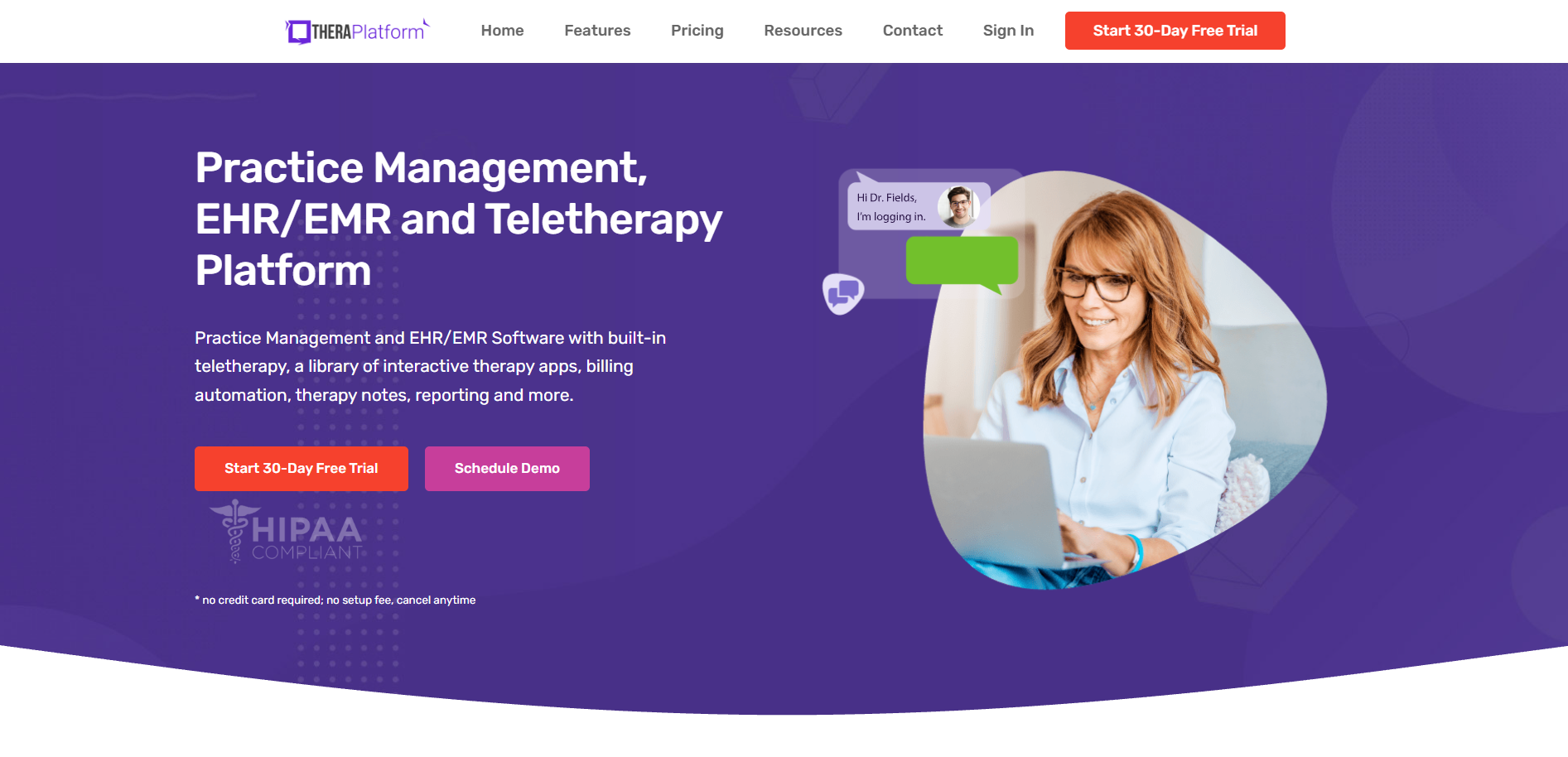
TheraPlatform is a telehealth platform with scheduling and billing features built for virtual sessions.
Who it’s for
Therapists who run most sessions online and want integrated video capabilities.
Key features
- Integrated telehealth: Built-in video sessions without the need for separate software.
- Session scheduling: Manage appointments and availability from one calendar.
- Basic billing tools: Submit claims and track payments with standard features.
Pros
- Easy telehealth workflow
- Affordable entry point
- Simple session-to-billing connection
Cons
- Billing feels secondary to telehealth
- Limited reporting depth for revenue tracking
- Fewer automation features for complex billing
Pricing
Starts from $39/month.
Bottom line
TheraPlatform works well for virtual care delivery, but it’s less ideal if billing efficiency is your top concern.
5. Thrizer: Best for out-of-network billing
What it does
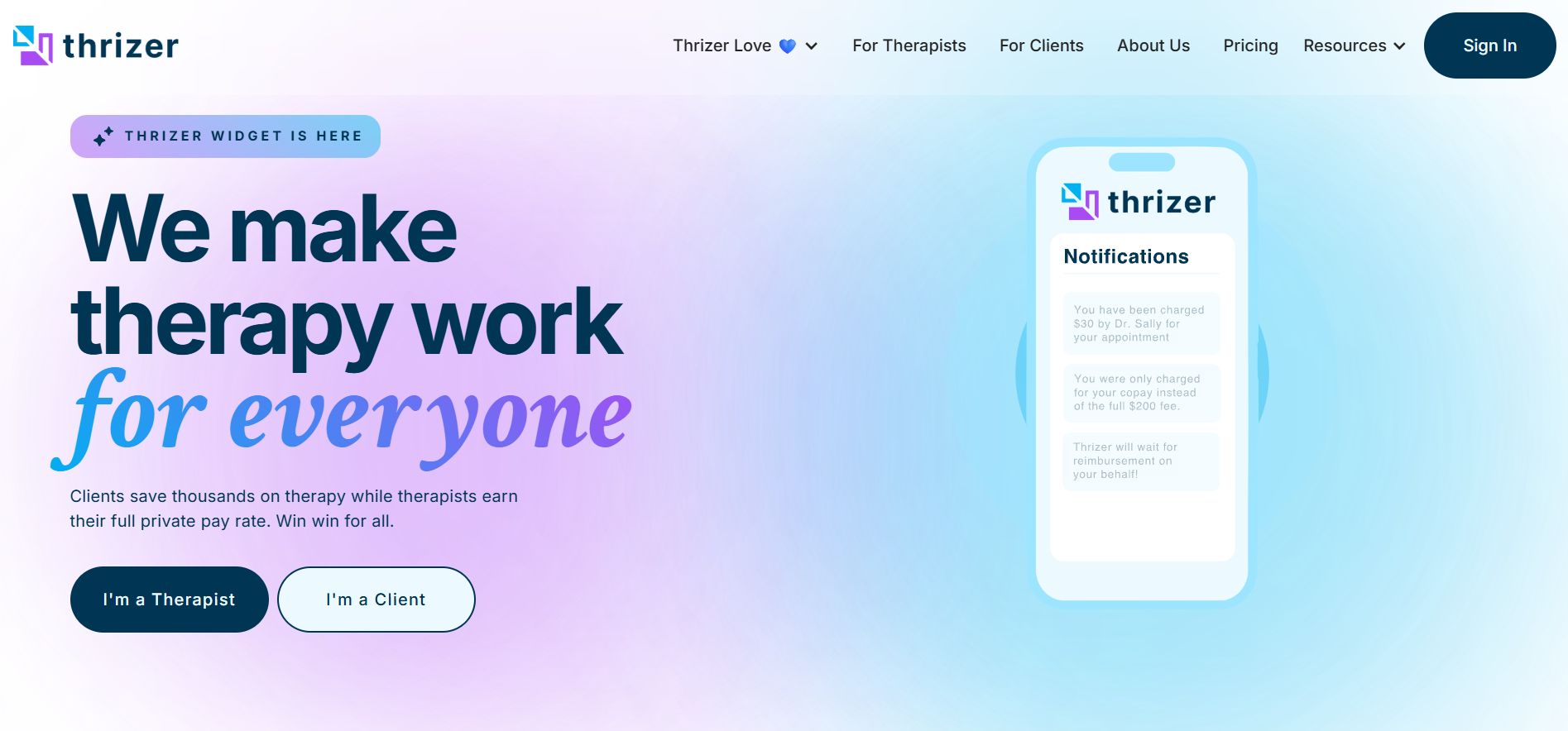
Thrizer is a client reimbursement platform that focuses specifically on out-of-network reimbursement rather than full billing operations
Who it’s for
Therapists who don't contract with insurance and want to simplify the client reimbursement process.
Key features
- Out-of-network claims handling: Generates superbills and helps clients submit reimbursement claims.
- Client reimbursement tracking: Monitors claim status and reimbursement progress.
- Automated superbill creation: Creates detailed invoices formatted for insurance submissions.
Pros
- Simplifies out-of-network claims for clients
- Reduces client confusion about reimbursement
- Handles state-specific insurance requirements
Cons
- Not a full billing system
- Percentage-based pricing that adds up over time
- Limited features beyond the reimbursement support
Pricing
Percentage per claim.
Bottom line
Thrizer works well for out-of-network models but doesn't replace comprehensive billing software.
How we tested these billing software tools
To compare these platforms fairly, we focused on what matters most for therapists: how accurately billing reflects clinical work, and how much manual effort each system requires.
We reviewed the demos, analyzed real user feedback from review platforms and Reddit, and evaluated typical therapist workflows.
We then tested how each platform handles common scenarios like authorization tracking, claim submissions, and documentation-to-billing connections.
What we evaluated
- Billing accuracy: Do the claims match what happened in the session?
- Workflow integration: Does billing connect directly to scheduling and notes, or does it require manual re-entry?
- Authorization handling: Does the system prevent billing past approved limits?
- Reporting clarity: Can you see revenue status without exporting spreadsheets?
- Learning curve: How long does it take staff to use the system correctly?
Platforms that required extensive manual data entry or showed frequent documentation mismatches scored lower. Tools that prevented errors before claims went out ranked higher.
Which billing software should you choose?
The best billing software is the one that meets your clinic’s unique needs and simplifies your billing and claims processes.
Here’s a quick summary of everything we’ve gone through above to help you decide…
Choose Passage Health if you're an ABA practice or autism service provider and you:
- Accept insurance and manage authorizations regularly
- Want billing tied directly to your clinical workflows to prevent errors
- Need to reduce claim denials before they happen
- Value integrated systems over juggling multiple platforms
- Run a growing practice that needs both clinical and billing tools
Choose:
- SimplePractice if you're a solo therapist with straightforward billing needs.
- TherapyNotes if you prioritize structured documentation and need strong audit trails for standard insurance workflows.
- TheraPlatform if you run most sessions virtually and need built-in telehealth features..
- Thrizer if you run a fully out-of-network practice and only need help simplifying client reimbursement (not full billing operations).
Avoid:
- Standalone billing tools if you're currently losing revenue to authorization mismatches or documentation errors
- Systems that require manual re-entry between scheduling and billing
- Platforms without real-time authorization tracking if you accept insurance
The final verdict
The best billing software for therapists prevents claim denials before they happen.
After reviewing these platforms, one particular pattern became clear: therapists lose the most time and revenue when billing lives in a separate system from clinical work.
This is why Passage Health stands out. Because billing connects directly to scheduling, documentation, and authorization tracking.
Claims also automatically reflect what happened in sessions, authorization limits are enforced before billing, and revenue visibility doesn't require constant spreadsheet exports.
If you want billing accuracy without creating extra admin work for your staff, Passage Health is worth a closer look.
Get started with Passage Health
If your therapists complete sessions one way, billing staff enter codes differently, and nobody catches authorization limits until claims get rejected, then claim denials can quickly pile up.
Passage Health helps you avoid this nightmare scenario by connecting billing directly to clinical workflows. Your sessions will automatically update billing codes, provider credentials, and authorization hours. So there’s no need for manual re-entry, and there’s no mismatched documentation issues.
With Passage Health, you get:
- Authorization tracking that prevents overbilling: See remaining hours during scheduling, not after claims are already denied.
- Session-to-billing automation: Sessions automatically populate billing records with the correct credentials and CPT codes.
- Real-time claims visibility: Fix and resubmit rejected claims the same day instead of waiting weeks.
- Denial pattern insights: Track why claims get denied to prevent the same problems in the future.
The platform also generates revenue reports without spreadsheets, and growing practices typically see their denial rates drop over time.
Book a demo to see how Passage Health can help your clinic prevent billing errors and recover lost revenue.
Frequently asked questions
What is the best billing software for therapists?
The best billing software for therapists is Passage Health because it connects clinical workflows directly to billing. Sessions, authorization tracking, and claims all flow from the same system, preventing documentation mismatches and manual re-entry errors.
Is billing software worth it for therapists?
Yes, billing software is worth it for therapists. It reduces claim errors, speeds up payments, and lowers admin workload by automating claims submissions and authorization tracking.
Can billing software reduce claim denials?
Yes, quality billing software can reduce claim denials. When billing connects to clinical documentation and authorization tracking, common denial causes get caught before claims are submitted.
What should therapists look for in billing software?
Therapists should look for authorization tracking, documentation alignment, and clear revenue reporting. The most important features prevent overbilling, reduce manual entry errors, and catch rejections quickly.
References
ABA Coding Coalition. (n.d.). ABA CPT codes. Retrieved from https://abacodes.org/codes/
Ebbers, T., Kool, R. B., Smeele, L. E., et al. (2022). The impact of structured and standardized documentation on documentation quality; a multicenter, retrospective study. Journal of medical systems, 46(7), 46. Retrieved from https://doi.org/10.1007/s10916-022-01837-9
Moy, A. J., Hobensack, M., Marshall, K., et al. (2023). Understanding the perceived role of electronic health records and workflow fragmentation on clinician documentation burden in emergency departments. Journal of the American Medical Informatics Association, 30(5), 797-808. Retrieved from https://academic.oup.com/jamia/article/30/5/797/7076268
