

The 5 Best Behavioral Health Billing Software in 2026


We tested and picked out 5 behavioral health billing software that prevent claim denials and integrate with your scheduling system to maintain accurate, error-free billing data.
The 5 best behavioral health billing software solutions
1. Passage Health: Best for integrated billing that prevents claim denials before they happen
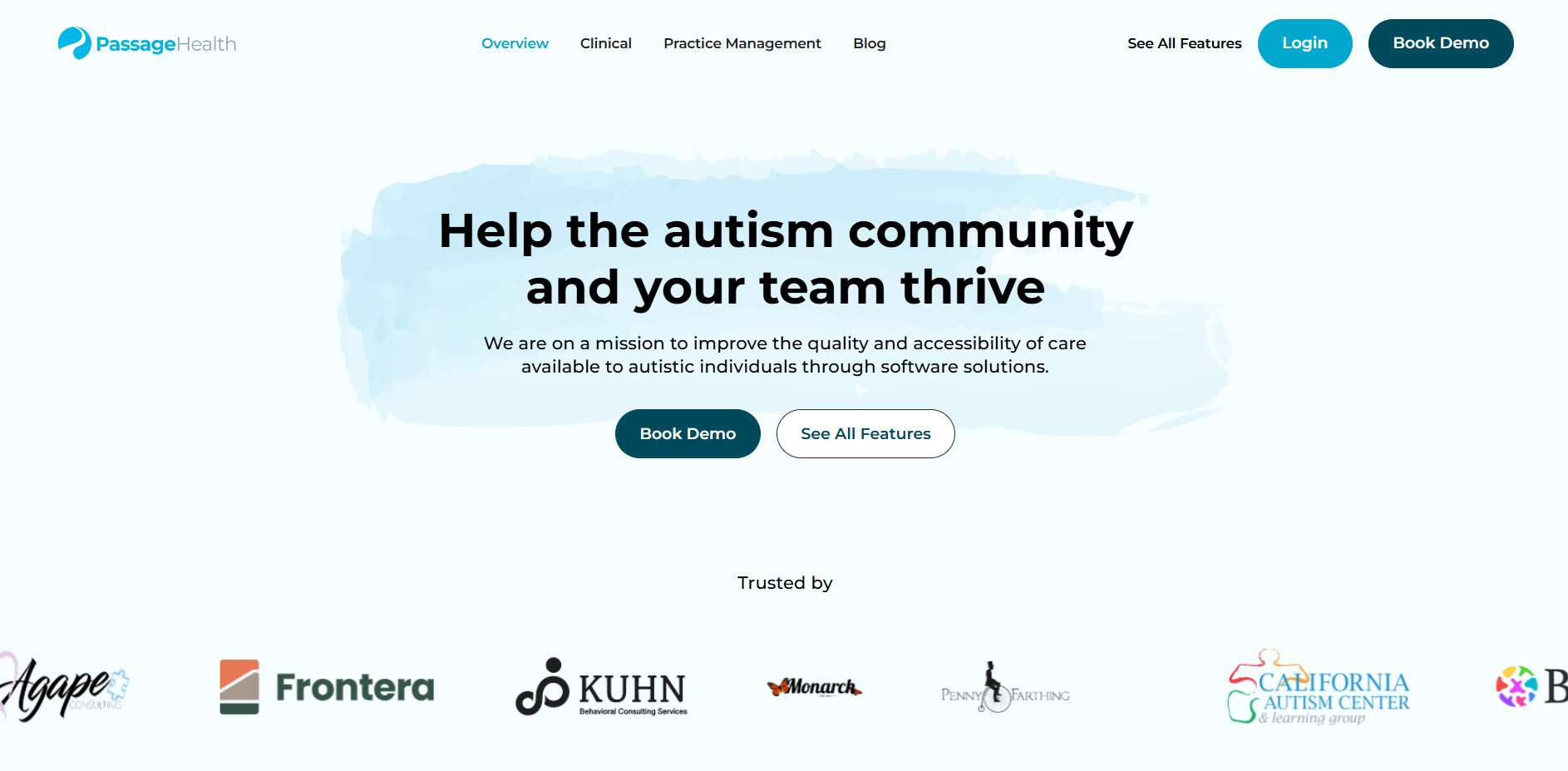
What Passage Health does
Passage Health is an all-in-one clinical and practice management platform, including behavioral health billing software that integrates billing with other practice management features.
With Passage Health, you can reduce manual data re-entry and give your billing teams clearer visibility into what’s happening across the revenue cycle.
Who it's for
ABA clinics of any size that are currently using separate billing software.
Key features
- Integrated authorization management: Tracks approved hours and helps make sure providers stay within authorized limits to help avoid claim denials from authorization issues.
- Real-time claims submission and status tracking: Sends claims directly to payors and provides immediate visibility into rejections, denials, or pending issues so billing teams can take faster action.
- Session-to-billing code automation: Automatically links therapy sessions with the correct provider credentials, CPT codes, unit counts, payor rules, and client information, thereby reducing the need for re-entry.
- Denial insights and prevention tools: The platform identifies patterns behind denials (such as missing documentation, incorrect CPT coding, or authorization exhaustion) and helps clinics correct issues before they impact revenue.
- Multi-location billing coordination: Sends claims to the correct payor across different clinic sites and keeps billing workflows consistent, even as teams grow.
- Mobile app for real-time data collection: Allows therapists to capture session data, notes, and required documentation from the field, feeding directly into billing and reporting without extra steps.
- Automated reporting & progress visualization: Generates clear progress summaries and operational reports that help clinical directors and administrators see trends across clients, providers, and sites.
Benefits
- Connects scheduling, documentation, and billing into one workflow.
- Reduces preventable billing errors through early authorization checks and automated CPT code mapping.
- Offers real-time visibility into denials and claim status changes.
- Designed specifically for ABA practices rather than general medical clinics.
Considerations
- Because of the integrated practice management features, it may have a higher initial cost than some standalone billing software.
- Requires upfront setup for billing rules, payor configuration, and authorization limits.
- Not ideal for practices wanting only billing without scheduling/operations integration.
Pricing
Passage Health walks you through a demo and a consultation to understand your needs for custom pricing.
Bottom line
Choose Passage Health if your practice is currently losing revenue to billing errors, authorization mismatches, or manual data entry between systems.
With Passage Health, you get reduced denials, improved payment cycles, and more time for your billing manager.
2. CentralReach: Best for enterprise billing with advanced financial reporting
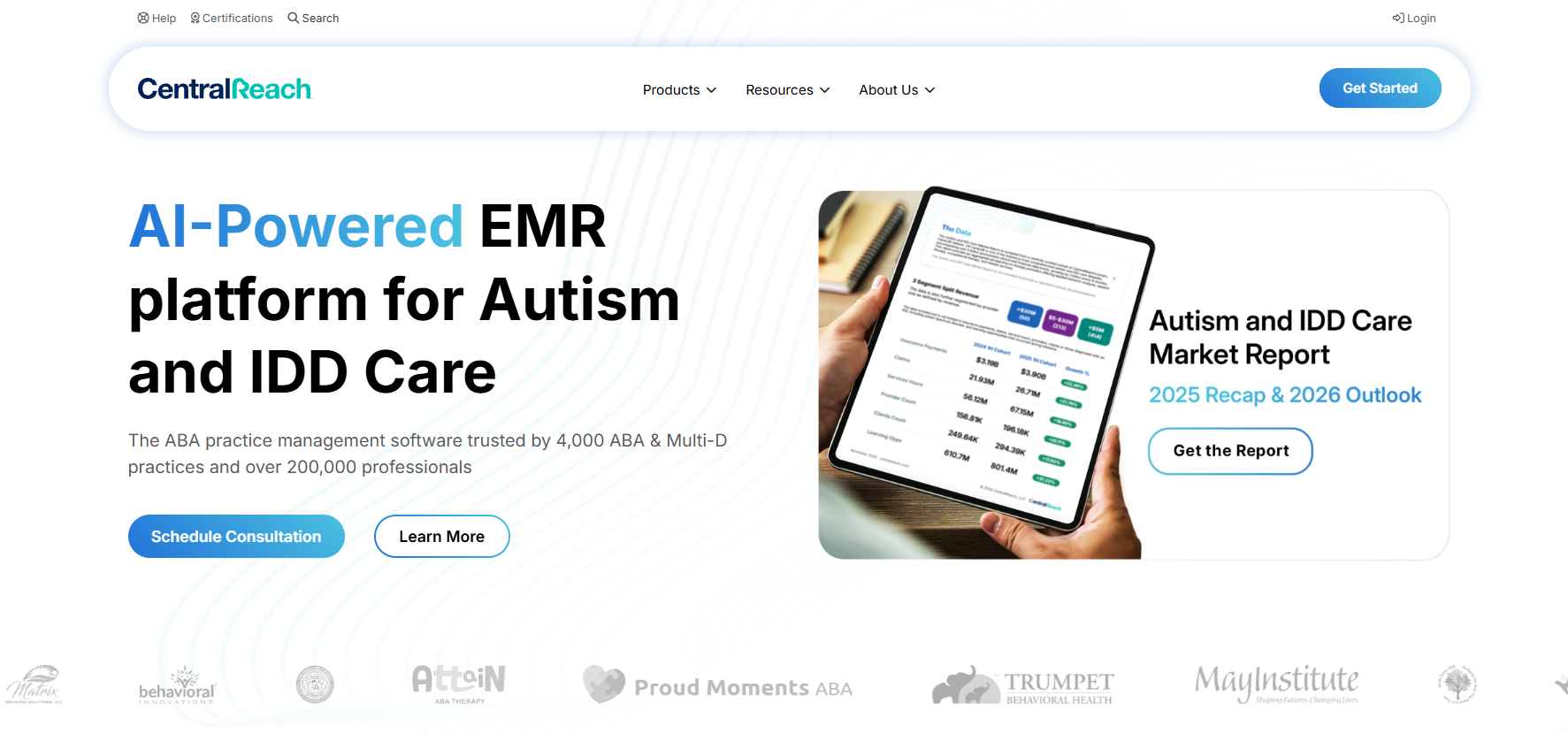
What CentralReach does
CentralReach billing system combines claims management with advanced financial reporting and multi-location coordination for enterprise practices.
Who it's for
Multi-location behavioral health organizations with complex billing requirements that need enterprise-level financial visibility and automation.
Key features
- Claims module with multi-view organization: You can submit claims in separate or combined view formats depending on your practice preference.
- Automated compliance and authorization checks: They have built-in rules that prevent scheduling beyond authorization limits and flag billing errors and payor-specific violations before claim submission to reduce denials.
- Payor-specific billing configuration: Allows you to customize billing rules and CPT code requirements for each payor.
- Multi-location claims consolidation and routing: Lets you manage billing across multiple clinic locations with automatic payor routing.
- Integrated financial reporting and analytics: You get advanced reporting that shows claims metrics, aging reports, payment trends, and revenue recognition data.
Benefits
- For truly large organizations
- Strong financial reporting for executive decision-making
- Proven reliability at enterprise scale
- Established relationships with major payors
Considerations
- Complex billing rules need technical resources to set up properly.
- There is an associated high cost of implementation.
- Technical user features may be complex to use.
- Reviewers have also reported occasional downtimes and glitches.
Pricing
You have to schedule a consultation to get custom pricing for the CentralReach billing platform.
Bottom line
Choose CentralReach only if you're a large enterprise already committed to managing complex systems and have dedicated billing/IT resources.
For growing practices, the complexity and cost often outweigh the benefits.
3. Ensora Health: Best for practices wanting improved billing integration
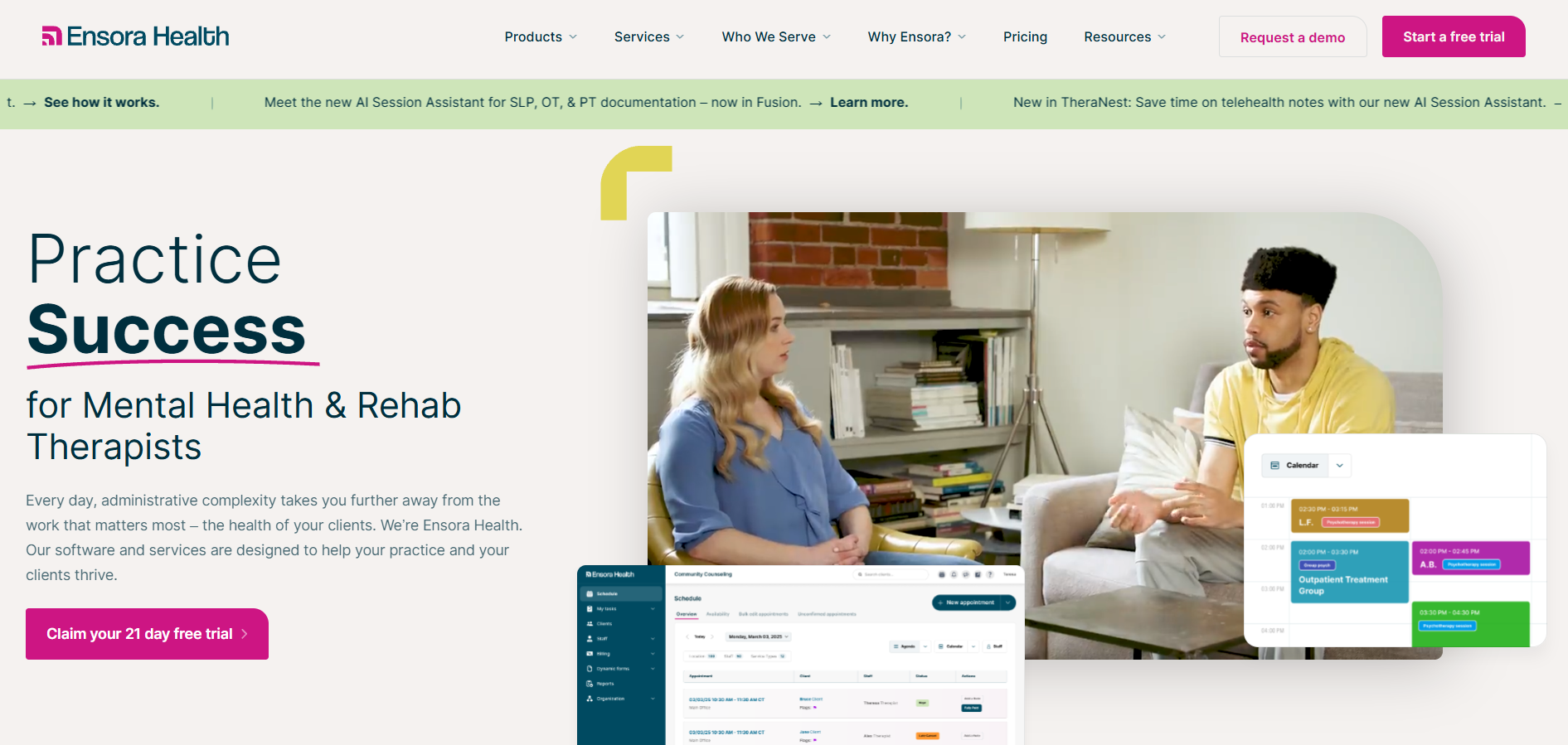
What Ensora Health does
Ensora Health's ABA Suite platform handles billing and claims management.
Who it's for
Mid-sized behavioral health practices that want better billing integration without the complexity of enterprise systems.
Key features
- Authorization tracking with session monitoring: You can track completed sessions against authorizations; the system triggers alerts when remaining hours are low.
- Electronic billing and claims submission: Allows you to submit claims directly to insurance companies; track submission status and receive real-time updates on claim acceptance or rejection.
- State-specific Medicaid billing rules: The platform enforces state-specific billing requirements for Medicaid-funded behavioral health services to reduce compliance-related denials.
- Multi-location billing support: You can manage scheduling and billing across multiple clinic locations from one system, with centralized oversight and reporting.
- Revenue cycle dashboards and reporting: Helps you track authorization usage, payment status, and outstanding balances through real-time dashboards. You can also generate customizable reports by client, employee, and location.
Benefits
- Strong billing-to-clinical integration
- Reviewers report a user-friendly layout that helps billing and clinical teams find key functions faster.
- Payor integrations work reliably.
Considerations
- Billing integration may require some manual verification steps.
- Limited automation compared to platforms with deeper end-to-end integration.
- Denial prevention features are less advanced than specialized billing platforms.
Pricing
You have to contact the Ensora Health team to get custom pricing for the Ensora RCM platform. They also offer a 21-day free trial.
Bottom line
Choose Ensora Health if billing integration matters, but you're willing to accept some manual workflow. You'll have better billing functionality than point solutions, but less automation than fully integrated platforms.
4. TherapyPM: Best for practices prioritizing billing and RCM features
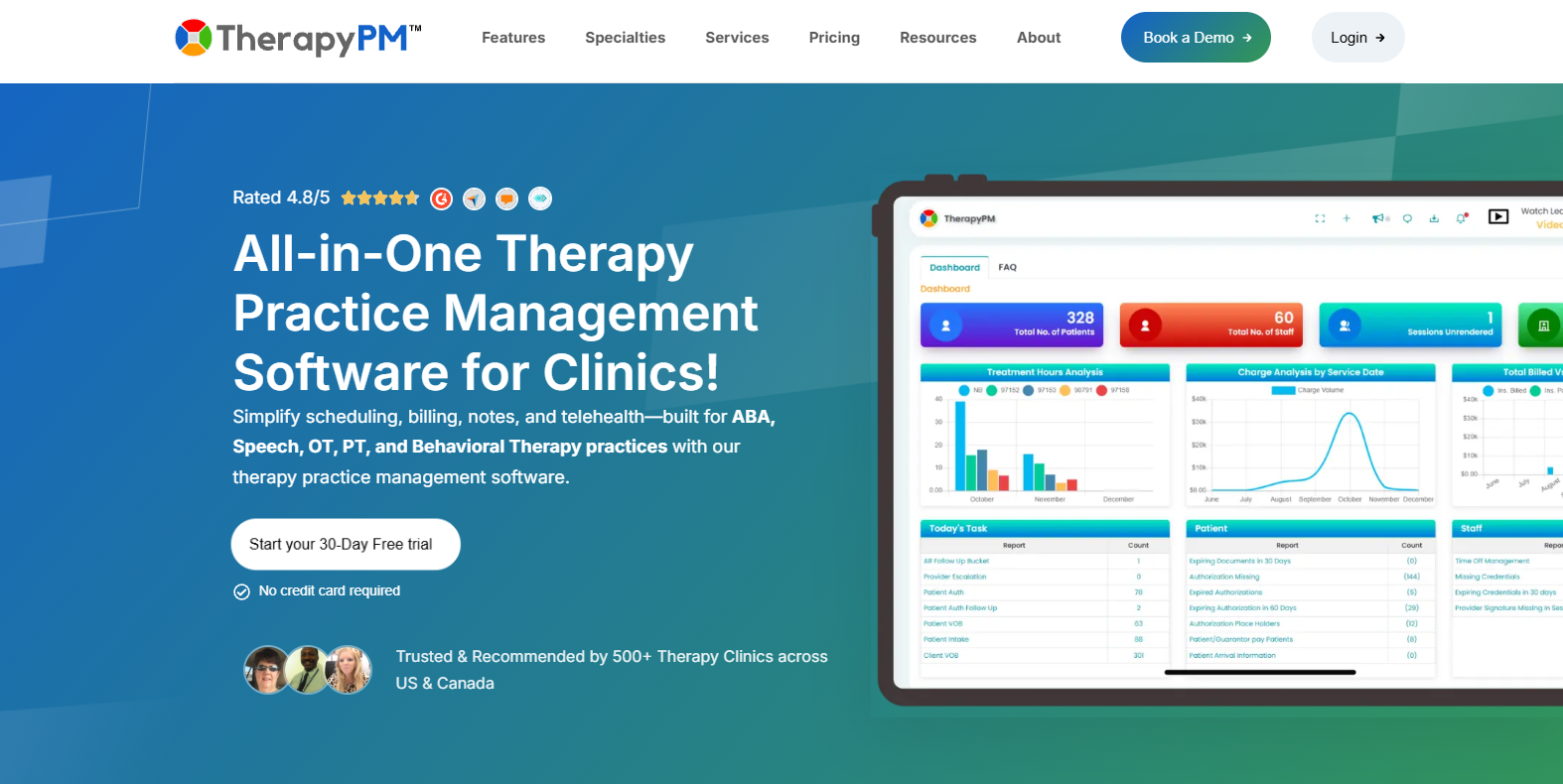
What TherapyPM does
TherapyPM is a dedicated billing and practice management platform with a strong focus on claims management and revenue cycle optimization.
Who it's for
Solo practitioners and growing practices that prioritize billing and revenue cycle management (RCM) functionality and are comfortable managing separate systems for clinical work and billing.
Key features
- Real-time authorization tracking with expiration alerts: The system monitors insurance authorizations and sends automated alerts before expiration.
- Claim validation and pre-submission scrubbing: The platform automatically checks claims for errors (like missing modifiers, invalid CPT codes, and payor-specific violations) before submission.
- Automated claim submission and payment tracking: You can submit claims directly to insurance, track submission status in real time, and receive immediate denial notifications.
- Payroll integration from scheduling: Session data and staff hours automatically feed into payroll calculation.
- Denial management and follow-up: You can track denial root causes, identify patterns, and manage appeals workflow on the software.
Benefits
- The billing focus creates strong claims management features.
- Advanced denial tracking helps identify patterns.
- Good workflows for managing claim cycles
- Integrates with clinical platforms
Considerations
- Limited provider credentialing features.
- Limited direct integration with some third-party platforms.
- No 24/7 live customer service available.
Pricing
TherapyPM offers a monthly pricing structure of $8 per client, with a base fee charge of $99.
Bottom line
Choose TherapyPM if billing and RCM are your priority, and you can handle separate systems for clinical and billing work. You get strong billing features but lose the denial prevention benefits of integrated systems like Passage Health.
5. MeasurePM: Best for budget-conscious practices needing basic billing
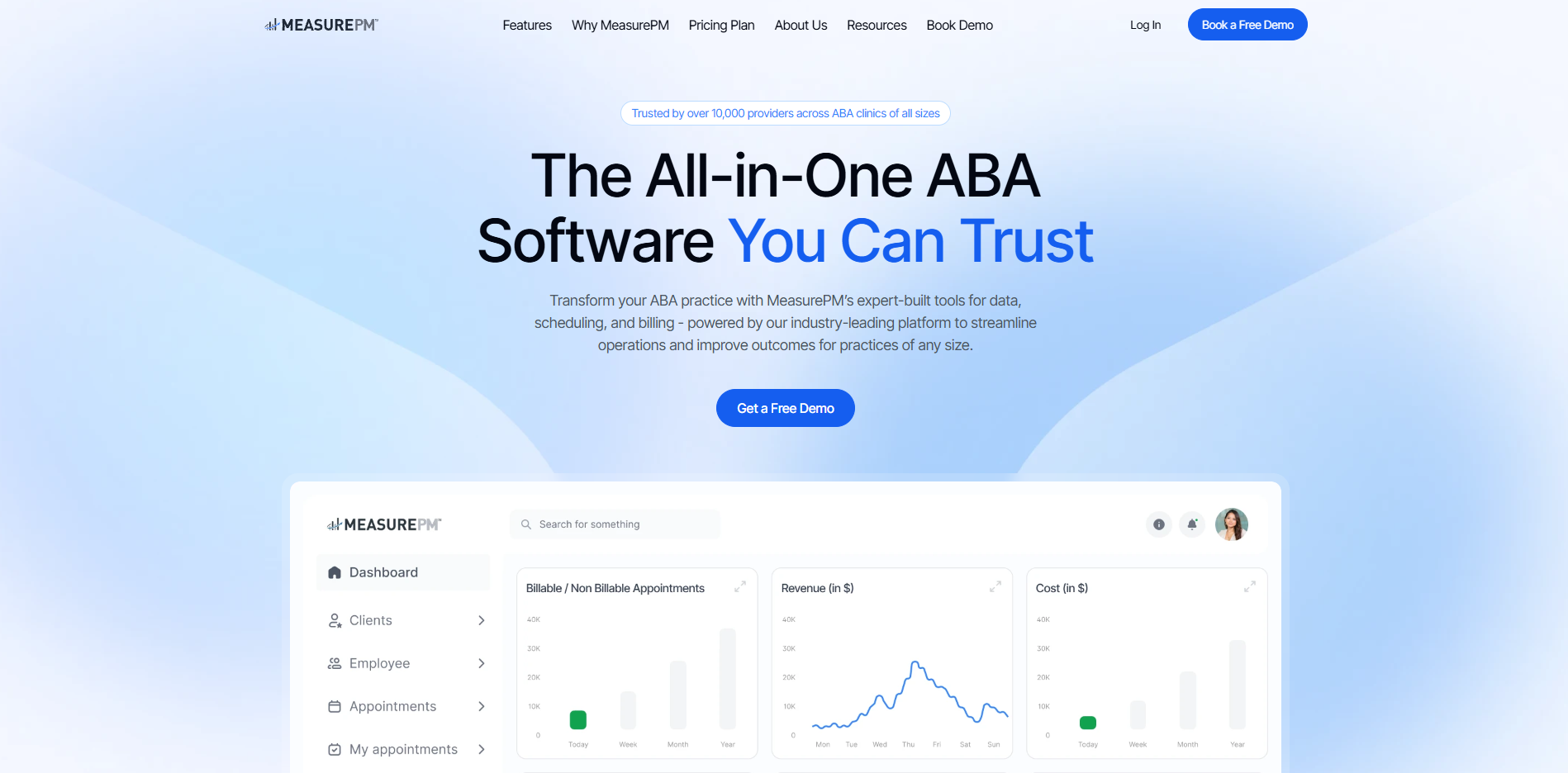
What MeasurePM does
MeasurePM bundles scheduling, billing, and practice management into one package.
Who it's for
Behavioral health practices where the budget is a primary constraint and billing complexity is manageable.
Key features
- Multi-payor claims submission with error checks: You can submit claims to payors directly with pre-filled CPT codes, built-in error checks reduce claim rejections, and improve accuracy across payor variations.
- Real-time authorization tracking and eligibility verification: The platform helps you track authorization usage and verify client insurance eligibility before scheduling.
- Payment reconciliation and denial tracking dashboards: You can monitor payments, denials, and outstanding balances through real-time dashboards.
- Automated claims with CPT code syncing from sessions: The billing platform syncs with session notes to automatically apply correct CPT codes and submit claims electronically.
Benefits
- Affordable billing option
- Integrated with scheduling in one system
- Simple billing workflows
- Simple interface that is easy for new users to learn
Considerations
- Limited public reviews and feedback
- Glitches and technical issues that may impact billing
- May not support all insurance companies.
Pricing
You have to get a personalized quote that fits your business needs.
Bottom line
Choose MeasurePM only if you're a small practice and cost is your absolute constraint. Expect to outgrow this system as your practice expands or the complexity of billing increases.
How to choose a behavioral health billing software that is right for your business
Choose behavioral health billing software by evaluating your current denial rate, biggest claim denial reasons, authorization management capabilities, and billing labor costs.
Step 1: Audit your current denial problem
Calculate your actual denial rate:
- Total claims submitted last month
- Claims accepted on first submission
- Denial rate: (Total claims - Accepted) ÷ Total claims × 100 = ___%
If your denial rate is high, your billing software is costing you significant revenue.
Step 2: Identify your biggest claim denial reasons
Ask your billing manager: "What are our top three denial reasons?"
Common behavioral health denials are usually due to:
- Authorization hour exhaustion
- Missing or incomplete documentation
- CPT code errors
- Medical necessity denials
- Duplicate claim submissions
Good billing software will help prevent most of these. If your top denials are preventable, integrated billing will help.
If your denials are mostly due to medical necessity (which is harder to prevent), stronger appeals workflows matter.
Step 3: Test your software for authorization management
During demos, walk through this scenario: "An individual has 20 hours authorized per month. We're scheduling sessions mid-month, and authorization expires at the end of the month. What happens when we try to schedule session 21?"
Good billing software prevents the scheduling of session 21. Many standalone billing systems allow you to schedule it, then catch it during billing. That's a 2 to 3 week delay before you discover the error.
Step 4: Calculate your billing labor cost
Calculate how many hours per week you spend on the following, so that you can redirect that time toward growing your practice instead:
- Verifying authorizations before billing
- Matching scheduled sessions to billing records
- Investigating billing errors or mismatches
- Appealing denied claims
- Re-entering session data between systems
Step 5: Ask current customers about denial reduction
When choosing your billing software, find honest reviews or reach out to the customers who are already using the software.
Find out what their denial rate was before, and what it is now. How long did it take to see improvement?
Behavioral health billing features that actually prevent denials
Billing denials come from preventable issues like missing authorizations, incorrect session details, outdated client information, or scheduling outside approved limits.
With the right behavioral health billing software, you can reduce these risks by catching errors early, automating key steps, and giving teams clear visibility into authorization and claim status before a claim is ever submitted.
The key features that directly help clinics prevent denials:
- Authorization management that works before billing:
Good billing software checks authorizations before sessions are scheduled, not after claims are submitted. This prevents scheduling beyond authorized hours.
- State-specific Medicaid rule enforcement
Because behavioral health is primarily Medicaid-funded and Medicaid rules vary by state, billing software must enforce state-specific requirements for CPT codes, session limits, travel time billing, and supervision requirements. Generic medical billing software often misses these.
- Automatic session-to-billing data flow
If billing staff are re-entering session data, there’s a risk of creating errors. Good systems automatically populate billing records from scheduling data, making sure that providers, CPT codes, units, and dates are correct without manual entry.
- Real-time claims status tracking
Instead of waiting 2 to 3 weeks to discover that a claim was rejected, good billing software shows you rejections in real time, allowing you to fix them and resubmit immediately. This accelerates your payment cycle significantly.
- Denial root cause tracking
Not all denials are equal. Knowing whether denials stem from authorization problems, documentation gaps, or CPT code errors helps you to identify the specific issues to fix. Good systems track this so you can prevent future denials in the same category.
The high cost of billing errors
ABA therapy clinics lose substantial revenue to billing and administrative errors, with a systematic review finding that inaccurate coding and billing result in lost revenue for medical practices, with physicians often missing charges or billing inaccurately.
These losses stem from coding errors, incomplete documentation, and administrative complexity in the billing process. Integrated billing systems that reduce manual data entry and automate coding validation can help minimize these preventable revenue losses.
The final verdict on the best health billing software
Passage Health could be considered the best behavioral health billing software, bringing all billing features into one unified platform.
Choose Passage Health if you're currently losing revenue to billing errors from data entry mistakes, authorization mismatches, or manual re-entry.
Because Passage Health combines all practice management and clinical features in one platform, you get to automate operations like data collection.
Book a demo to see why Passage Health is the best behavioral health billing software for your team.
Frequently asked questions
What is behavioral health billing software?
A behavioral health billing software is a platform that automates the billing process for behavioral health services.
It simplifies insurance verification, claim submissions, authorization tracking, and revenue cycle management to help maintain smooth payments and a reduced number of claim denials.
What's the typical behavioral health claim denial rate?
The typical healthcare claim denial rate is in keeping with the CMS reported rate of 18% for in-network claims. However, this rate is higher for ABA therapy due to coding and authorization errors.
How much revenue do behavioral health practices lose to billing errors?
ABA therapy clinics lose substantial revenue to billing and administrative errors, with a systematic review finding that inaccurate coding and billing result in lost revenue for medical practices, with physicians often missing charges or billing inaccurately.
Should billing software be integrated with scheduling?
Yes, billing software should be integrated with scheduling for behavioral health practices. When scheduling and billing are separate systems, data entry errors transfer from one to the other.
Integrated systems, where scheduling automatically populates billing records, reduce errors significantly and hasten payment cycles.
What's the difference between integrated billing and RCM services?
Integrated billing software allows you to handle claims submission, tracking, and denial management independently.
However, revenue cycle management (RCM) services involve hiring a company to manage your entire billing process.
Integrated billing gives you more control; RCM services reduce internal workload but cost more.
How do I know if my billing software is costing me money?
Calculate your clean claim rate (percentage of claims accepted on first submission). If it's low, your billing software is likely costing you money through preventable denials.
Also, track the time your billing manager spends on manual data entry, investigating billing mismatches, and appealing denials.
Is behavioral health billing software HIPAA compliant?
Yes, all major behavioral health billing platforms are Health Insurance Portability and Accountability Act (HIPAA) compliant with encrypted data transmission, secure logins, access controls, and audit logs.
References
American Hospital Association. (5 July 2022). CMS data shows high rate of health plan claims denials. AHA News. Retrieved from https://www.aha.org/news/headline/2022-07-05-cms-data-shows-high-rate-claims-denials
Behavioral Proz. (n.d.). How BehavioralProz Enhances RCM Efficiency for ABA Providers. Retrieved from https://behavioralproz.com/blog/rcm-efficiency-for-aba-providers/
Burks, K., Shields, J., Evans, J., et al. (2022). A systematic review of outpatient billing practices. SAGE Open Med, 23. doi: 10.1177/20503121221099021. Retrieved from https://pubmed.ncbi.nlm.nih.gov/35646364/
Centers for Medicare & Medicaid Services. (n.d.). Behavioral health services. Medicaid.gov. Retrieved from https://www.medicaid.gov/medicaid/benefits/behavioral-health-services
CentralReach. (n.d.). AI-Powered EMR platform for Autism and IDD Care. Retrieved from https://centralreach.com/
Ensora Health. (n.d.). Software and services for mental, behavioral, and rehabilitative therapists. Retrieved from https://ensorahealth.com/
G2. (n.d.). Ensora Health (formerly Therapy Brands) – Reviews. Retrieved from https://www.g2.com/sellers/ensora-health-formerly-therapy-brands#reviews
MeasurePM. (n.d.). The All-in-One ABA Software You Can Trust. Retrieved from https://measurepm.com/
Software Advice. (n.d.). CentralReach – Reviews. Retrieved from https://www.softwareadvice.com/medical/centralreach-profile/reviews
Tseng, P., Kaplan, R.S., Richman, B.D., et al. (2018). Administrative Costs Associated With Physician Billing and Insurance-Related Activities at an Academic Health Care System. JAMA, 319(7):691-697. doi: 10.1001/jama.2017.19148. PMID: 29466590; PMCID: PMC5839285. Retrieved from https://pubmed.ncbi.nlm.nih.gov/29466590/
TherapyPM. (n.d.). All-in-One Therapy Practice Management Software for Clinics! Retrieved from https://therapypms.com/
TherapyPM. (n.d.). Pricing. Retrieved from https://therapypms.com/pricing/
