

7 Best Behavioral Health EHR Software Platforms in 2026


Generic Electronic Health Records (EHR) systems often miss what behavioral health practices actually need: session-based documentation, supervision tracking, and billing that connects to clinical workflows. We tested seven behavioral health EHR software platforms to see which ones deliver and which ones fall short.
7 best behavioral health EHR software: At a glance
1. Passage Health: Best behavioral health EHR software overall
What it does
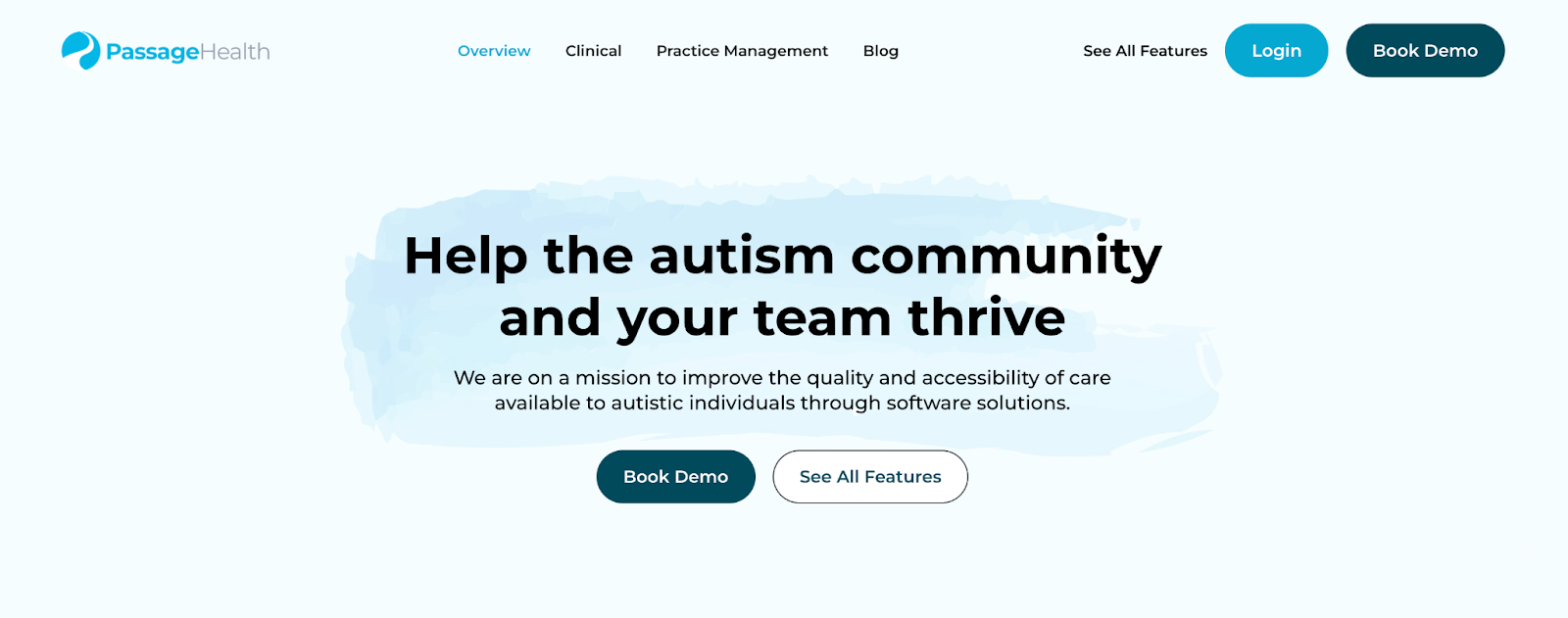
Passage Health combines clinical documentation, scheduling, supervision, and billing in one platform so data flows between them.
Who it's for
ABA practices and behavioral health providers who bill insurance and need supervision, credentials, and authorizations tracked alongside clinical work.
Most practices run clinical documentation in one system and billing in another. But that means someone has to re-enter session data, match it to the right codes, and hope nothing gets missed or lost.
Research shows this kind of fragmented workflow increases data entry errors and adds unnecessary admin work.
Passage Health was built to solve this problem by keeping clinical and billing data in one place. Document a session, and the billing side already has what it needs.
Key features
- Billing tied to sessions: Claims pull directly from session documentation, so clinical and billing data match automatically.
- Supervision linking: Supervision records attach to specific sessions and staff credentials, which simplifies audit prep.
- Authorization tracking: Remaining authorized hours are displayed during scheduling to prevent overbilling.
- Automated billing records: Sessions populate with the correct CPT codes and provider credentials without needing to enter them manually.
- Compliance reporting: Generate payor and regulatory reports from data already in the system.
- Role-based permissions: Control access to clinical records, billing, and supervision logs by staff role.
Pros
✅Purpose-built for ABA and behavioral health workflows
✅Eliminates manual data transfer between clinical and billing
✅Credential mismatches get caught before claims go out
✅Supervision documentation stays organized without spreadsheets
✅Includes onboarding support
Cons
❌Not designed for hospitals or surgical practices
❌No public pricing (requires a custom quote)
What users say
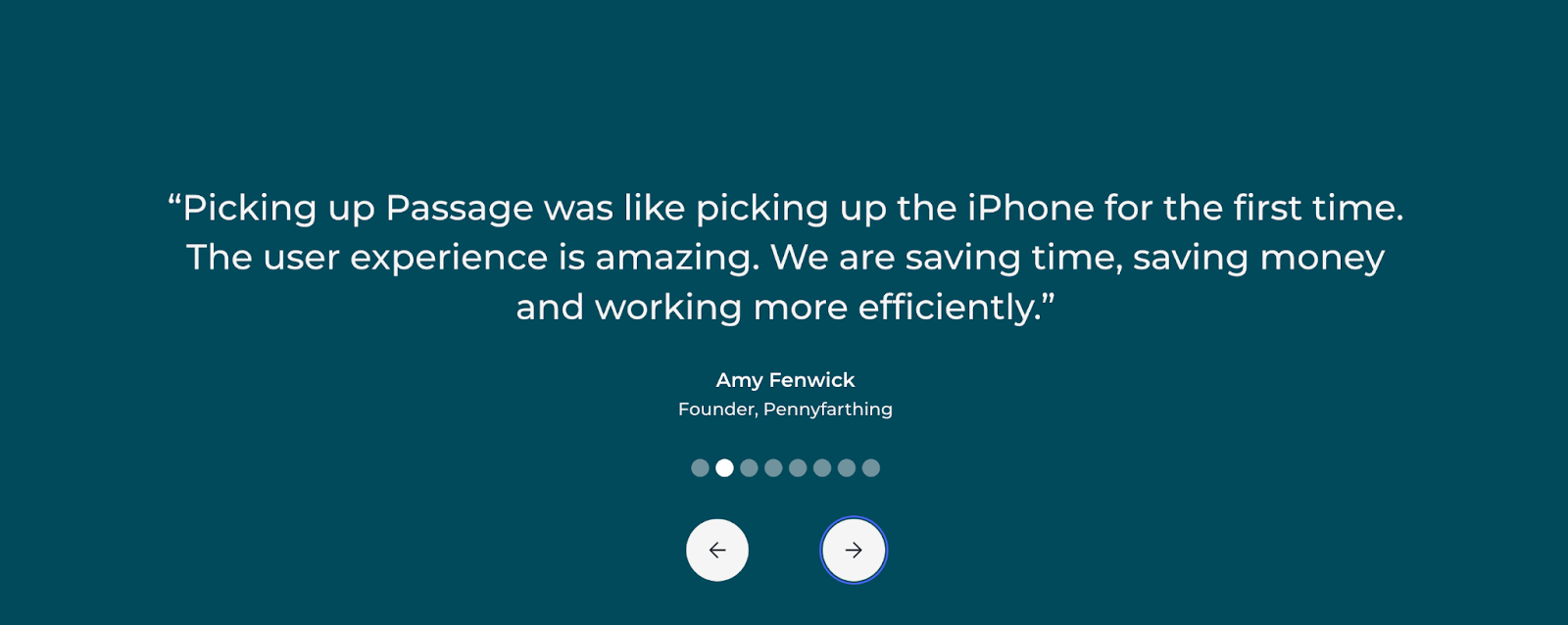
“Running a session has never been so easy. My team is loving the app and the real-time data syncing. Being able to enter data, see it saved instantly, edit the note at the same time, and have a supervisor seeing this happen live on their own device is amazing.” – Nicole Edge, Autism Services of Florida
“With Passage we are able to move more efficiently, it is a game changer. The system is seamless. The onboarding experience was amazing and ongoing support is really proactive.” – Liza Ozowara, Executive Director, Agape
Pricing
Custom pricing based on practice size. Contact Passage Health for a quote.
Bottom line
For ABA and behavioral health practices billing insurance, Passage Health handles the clinical-to-billing connection that other platforms leave to manual workarounds. The supervision and authorization tracking alone can save significant admin time.
Book a demo to see how it fits your practice.
2. Valant: Best for outpatient behavioral health practices

What it does
Valant is a cloud-based EHR built specifically for behavioral health. It covers clinical documentation, practice management, and patient communication.
Who it's for
Outpatient behavioral health practices, including psychiatry and therapy clinics, that want a system designed for their workflows.
Key features
- Clinical documentation
- ePrescribing
- Patient portal
Pros
✅Built specifically for behavioral health
✅Includes outcome measurement tools
✅Supports both therapy and psychiatry workflows
Cons
❌Custom pricing requires contacting sales
❌Some users say advanced features take time to learn
❌Less suited for ABA-specific workflows like supervision tracking
What users say
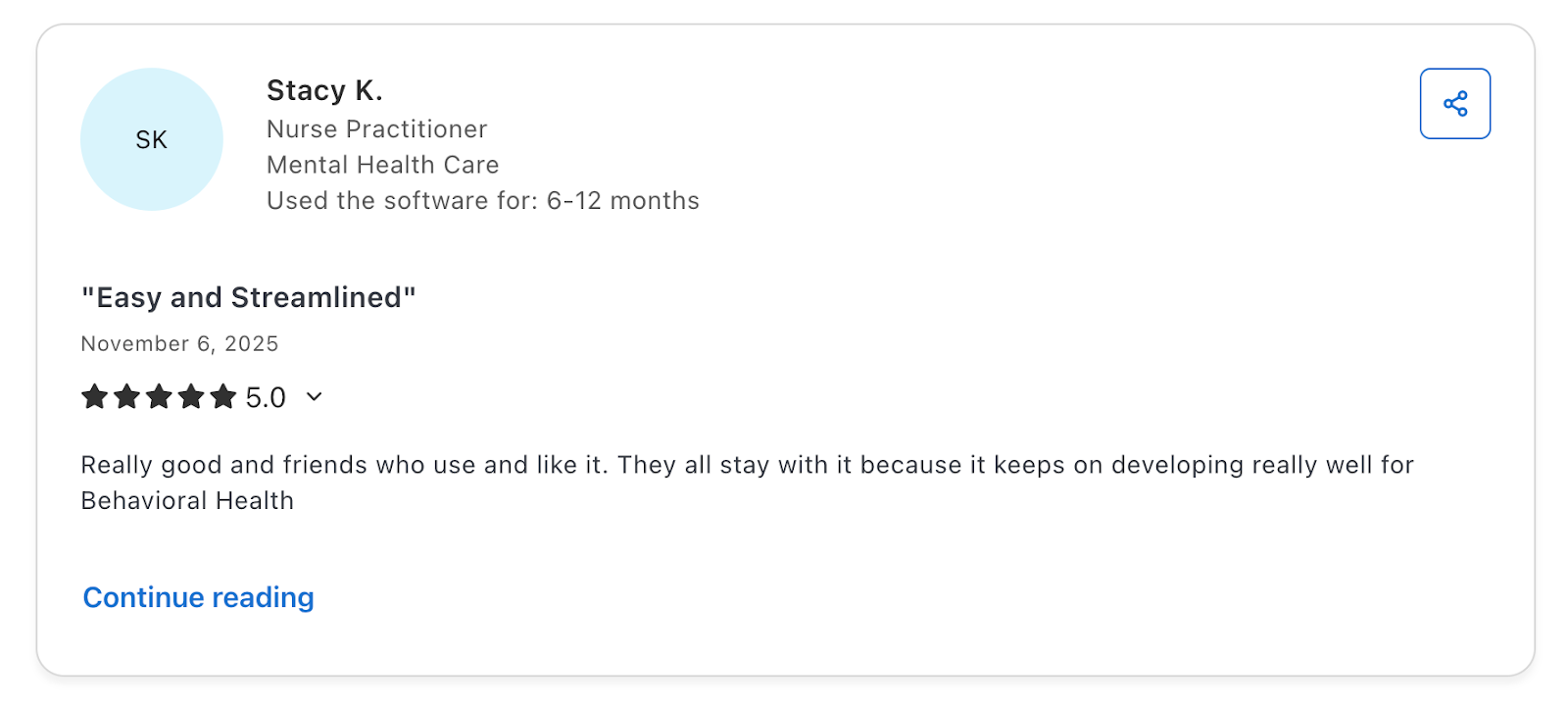
"I would highly recommend Valant for outpatient Psychiatry as it is simple to use, offers portal communication, and also allows notes to carry forward." – Scott B., Physician Assistant, Capterra
"The templates are awful and archaic, telehealth rarely works, new patient portal set up is an administrative nightmare." – Verified User, Capterra
Pricing
Custom pricing based on practice needs.
Bottom line
Valant works well for outpatient psychiatry and therapy practices, but ABA providers may find it lacks the supervision tracking and authorization tools they need.
3. Qualifacts (CareLogic/Credible): Best for large agencies and CCBHCs

What it does
Qualifacts offers multiple EHR platforms (CareLogic, Credible, InSync) that are designed for behavioral health and human services organizations with complex reporting needs.
Who it's for
Large behavioral health agencies, Certified Community Behavioral Health Clinics (CCBHCs), and organizations serving multiple populations (mental health, substance use, IDD).
Key features
- CCBHC compliance tools
- AI-assisted documentation (Qualifacts iQ)
- Multi-program and multi-location management
Pros
✅Strong CCBHC and compliance reporting
✅Serves 2,700+ agencies across all 50 states
✅AI-powered documentation assistance
Cons
❌Enterprise focus may be overkill for smaller practices
❌Multiple platforms can create confusion about which to choose
❌Implementation can take longer for larger organizations
What users say
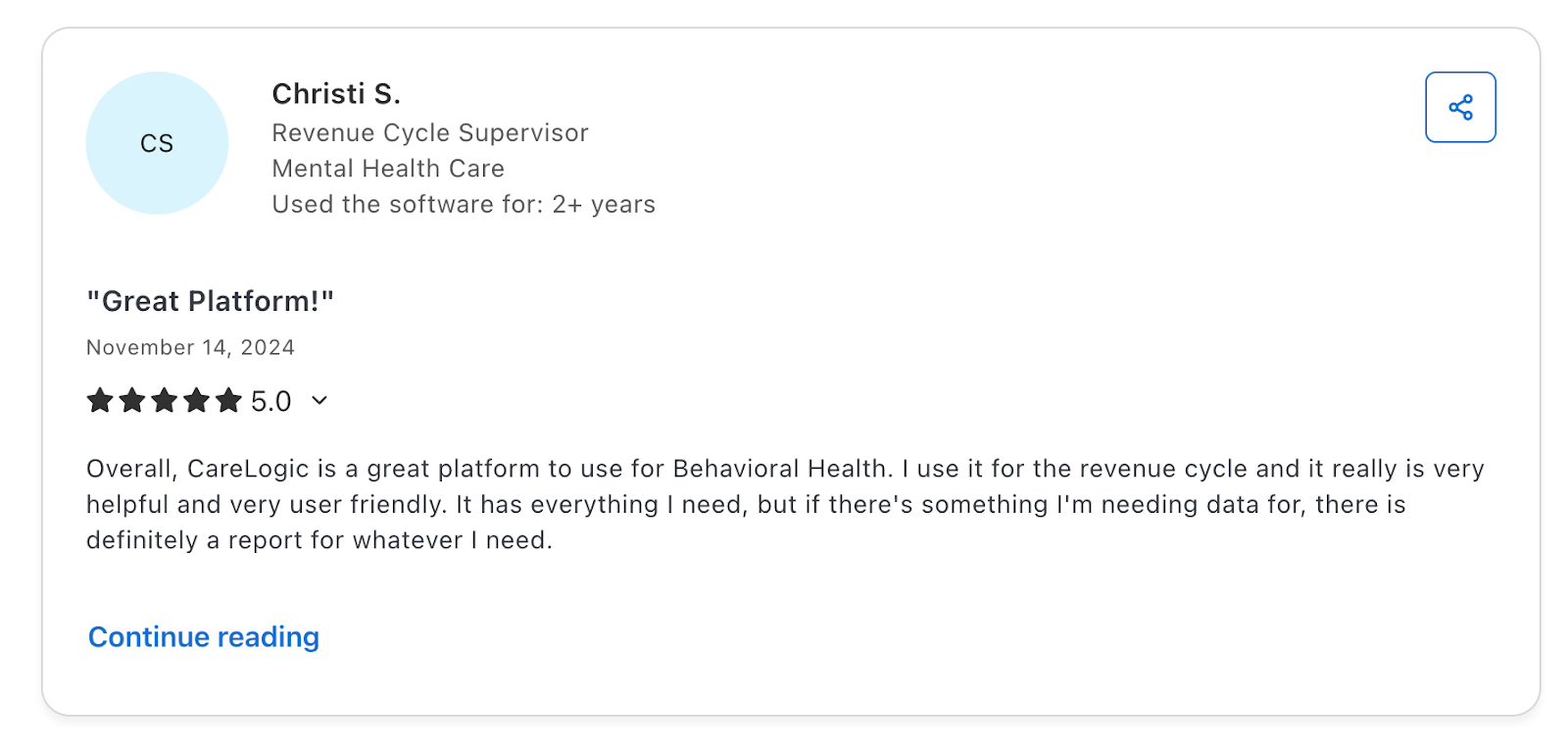
"CareLogic is easy for end users. The simple schedule-keep appointment-link to document-bill each day workflow works for clinicians. The billing is accurate, and we've never lost a bit of data." – Verified User, Capterra
"This EHR is very clunky. The interface is not user-friendly, and it takes an unnecessary number of clicks to get even very simple documents into writing." – Verified Medical Director, Capterra
Pricing
Custom pricing based on organization size and needs.
Bottom line
Qualifacts is a strong fit for large behavioral health agencies with complex compliance needs, especially CCBHCs. Smaller practices or ABA-focused clinics may find it more than they need.
4. ICANotes: Best for fast documentation in small practices
What it does
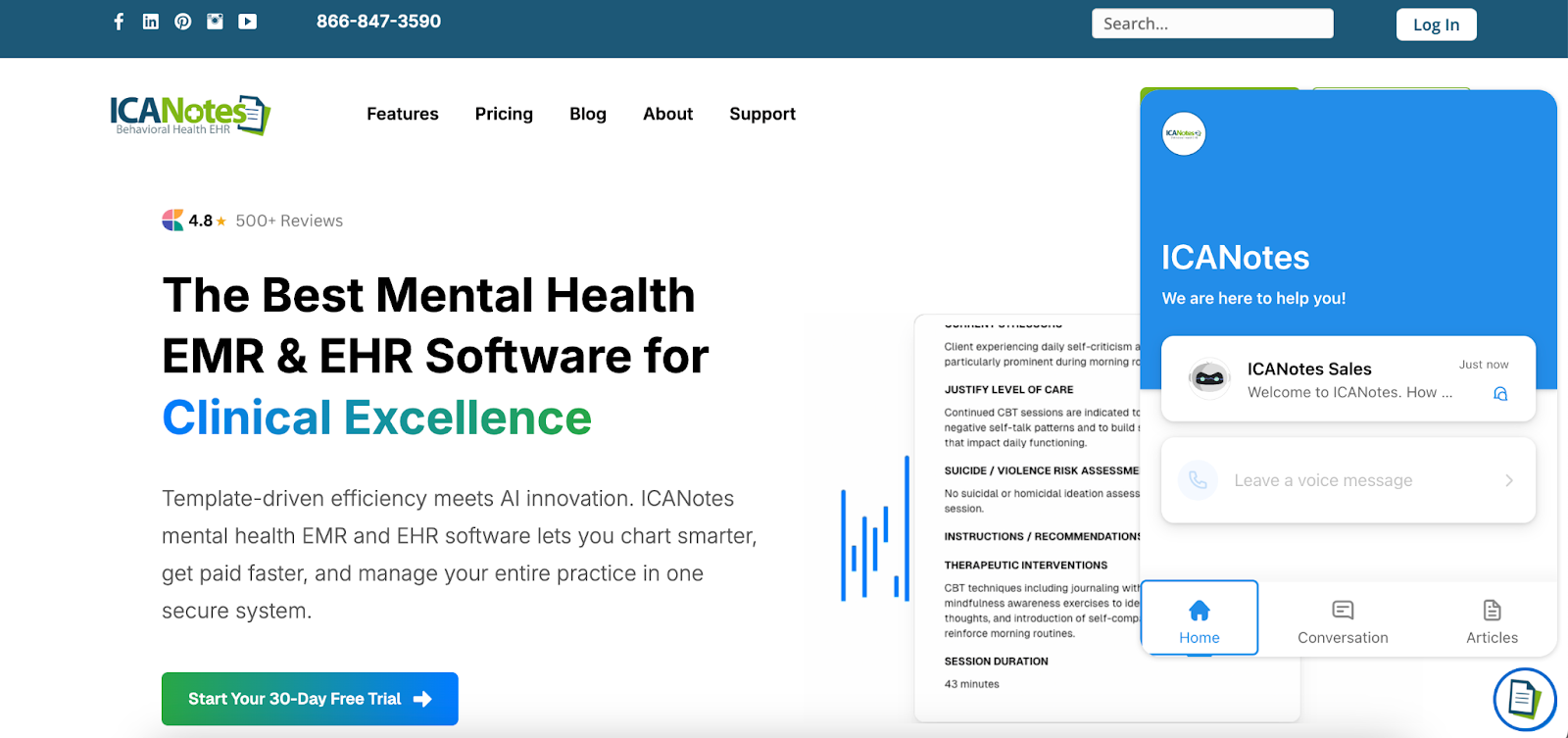
ICANotes is a behavioral health EHR focused on speed. It uses menu-driven templates that let clinicians complete notes quickly without lots of typing.
Who it's for
Solo practitioners and small practices where documentation speed matters.
Key features
- Menu-driven note templates
- AI scribe (optional add-on)
- Built-in billing and claims submission
Pros
✅Notes can be completed in minutes
✅Founded by a practicing psychiatrist
✅Offers a 30-day free trial
✅Includes over 100 assessment tools
Cons
❌Less customization for ABA-specific workflows
❌Supervision tracking isn't as developed as ABA-focused platforms
❌Add-on features increase the base price
What users say
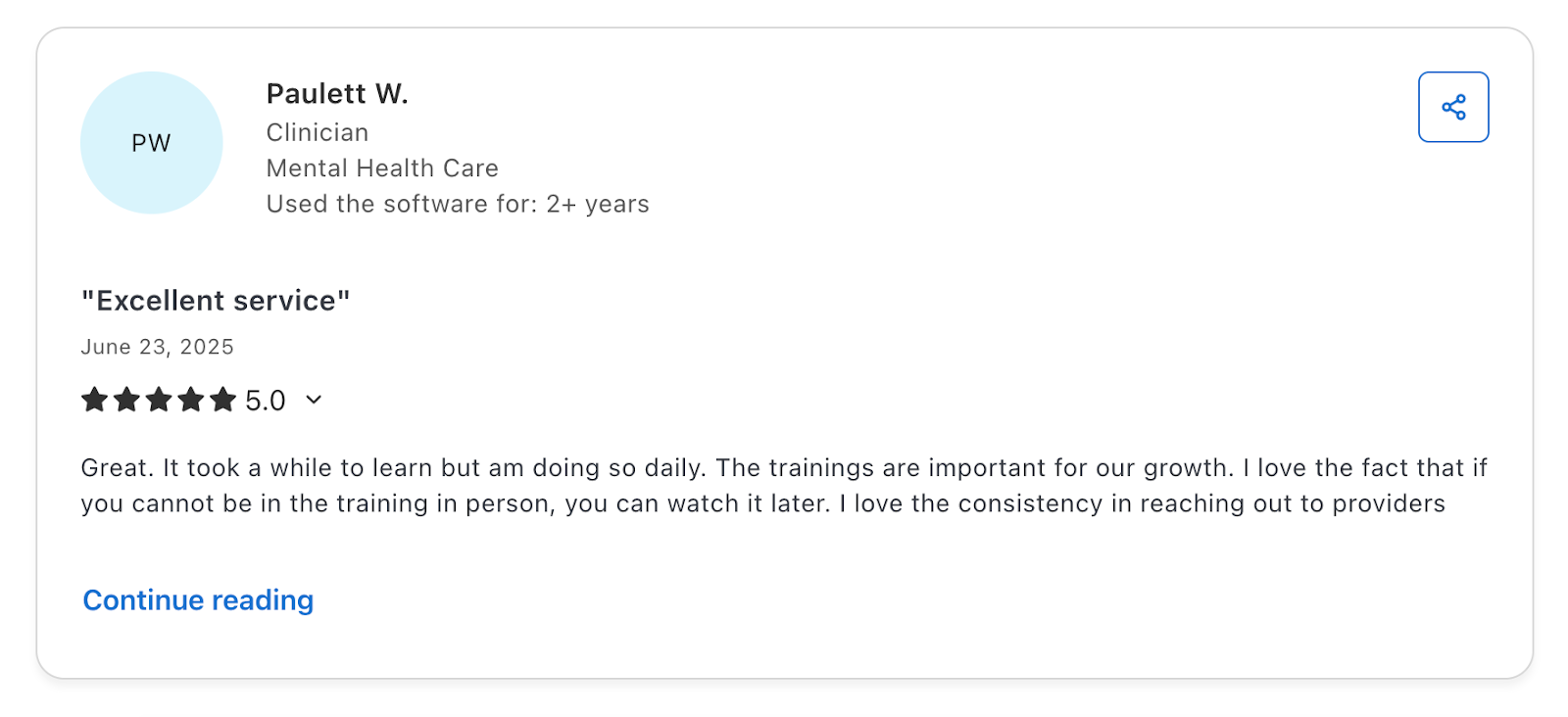
"As a very busy child and adolescent psychiatrist, ICANotes has made my life so much more manageable. The format is easy, documentation is quick, and the staff are exemplary." – Verified User, Capterra
"The billing software is horrible, with repeated problems and errors, very limited audit trail, and lots of weird glitches that tech support has no clue on how to resolve." – Verified User, Capterra
Pricing
Notes only: Starting at $55/month (full-time)
Non-prescribing clinicians: Starting at $75/month (full-time)
Prescribing clinicians: Starting at $213/month (full-time)
Part-time options are also available at reduced rates. ($35/month, $45/month, and $138/month, respectively.)
Bottom line
ICANotes provides fast documentation for mental health practices. ABA practices with supervision tracking and authorization needs might find it doesn't cover those needs well.
5. Cantata Health (Arize): Best for community mental health centers
What it does
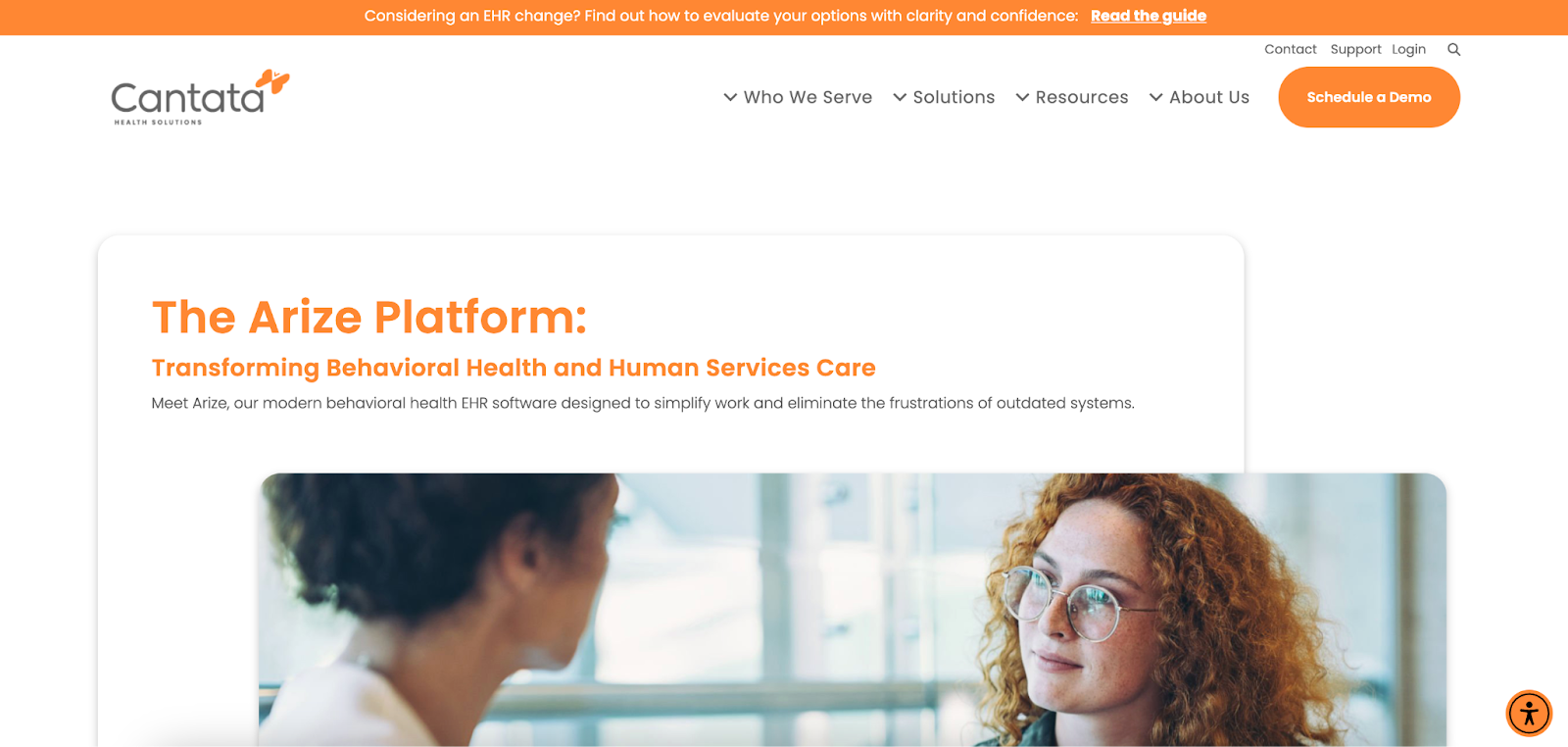
Cantata Health's Arize platform is a behavioral health EHR designed for community mental health centers and human services organizations.
Who it's for
Community mental health centers, foster care agencies, and organizations offering case management services.
Key features
- Case management tools
- Medication management (including eMAR)
- Revenue cycle management
Pros
✅Strong case management capabilities
✅Serves mental health, substance use, and foster care
✅Native telehealth functionality
Cons
❌Focus on large community organizations
❌May be more than smaller ABA practices need
❌Implementation takes time and staff commitment
What users say
Arize doesn't yet have a significant presence on third-party review platforms, so independent user feedback is limited at this time.
Pricing
Custom pricing.
Bottom line
Arize is well-suited for community mental health centers and human services organizations. ABA practices may find the case management focus doesn't match their workflows.
6. TherapyNotes: Best for mental health counselors
What it does
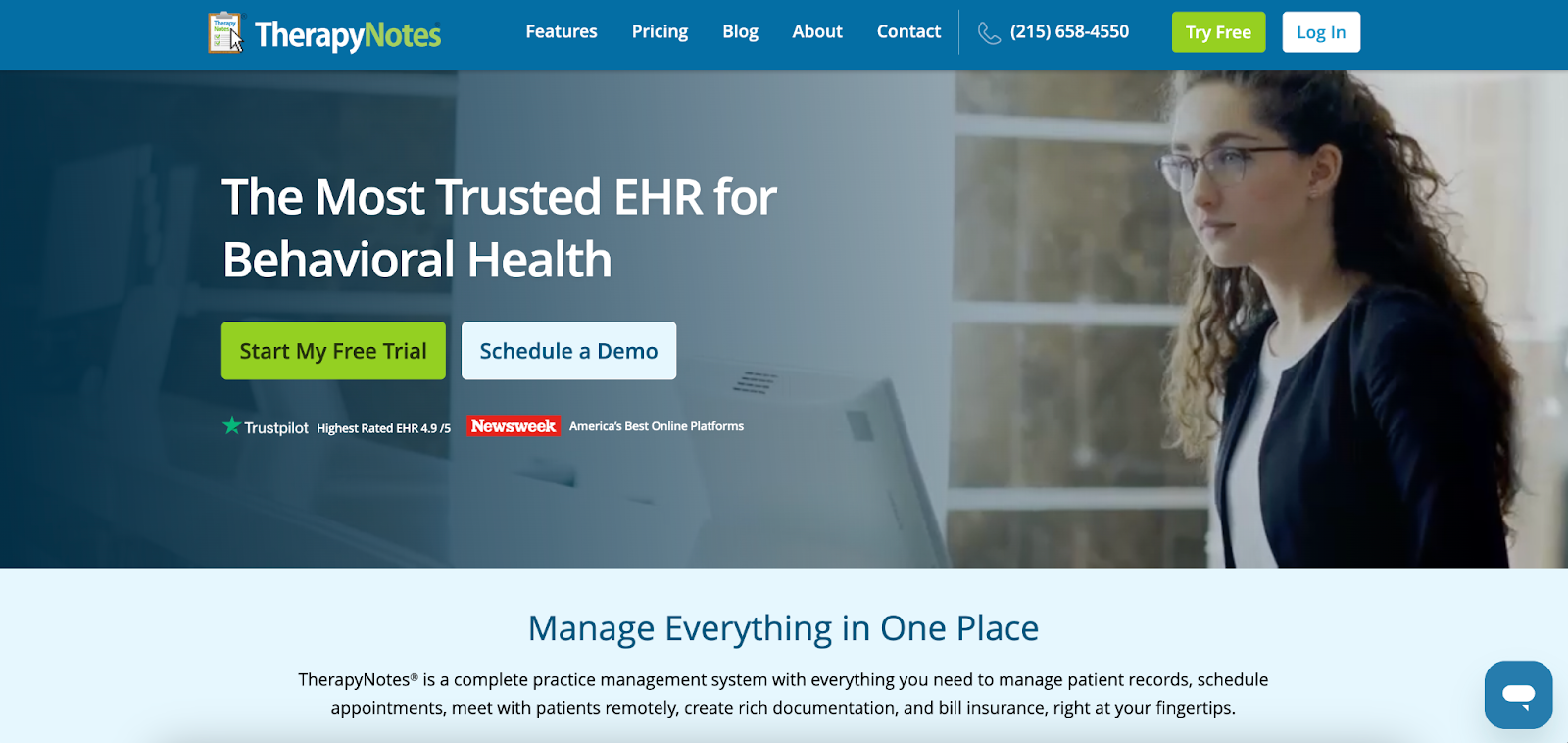
TherapyNotes is an EHR focused on documentation for mental health professionals, including therapists, psychologists, and counselors.
Who it's for
Mental health counselors and psychologists who want straightforward note-writing tools.
Key features
- Structured note templates
- Appointment reminders
- Integrated billing
Pros
✅Clean, simple interface
✅Fast note completion
Cons
❌Basic reporting capabilities
❌No built-in supervision tracking
❌Limited for ABA-specific workflows
What users say
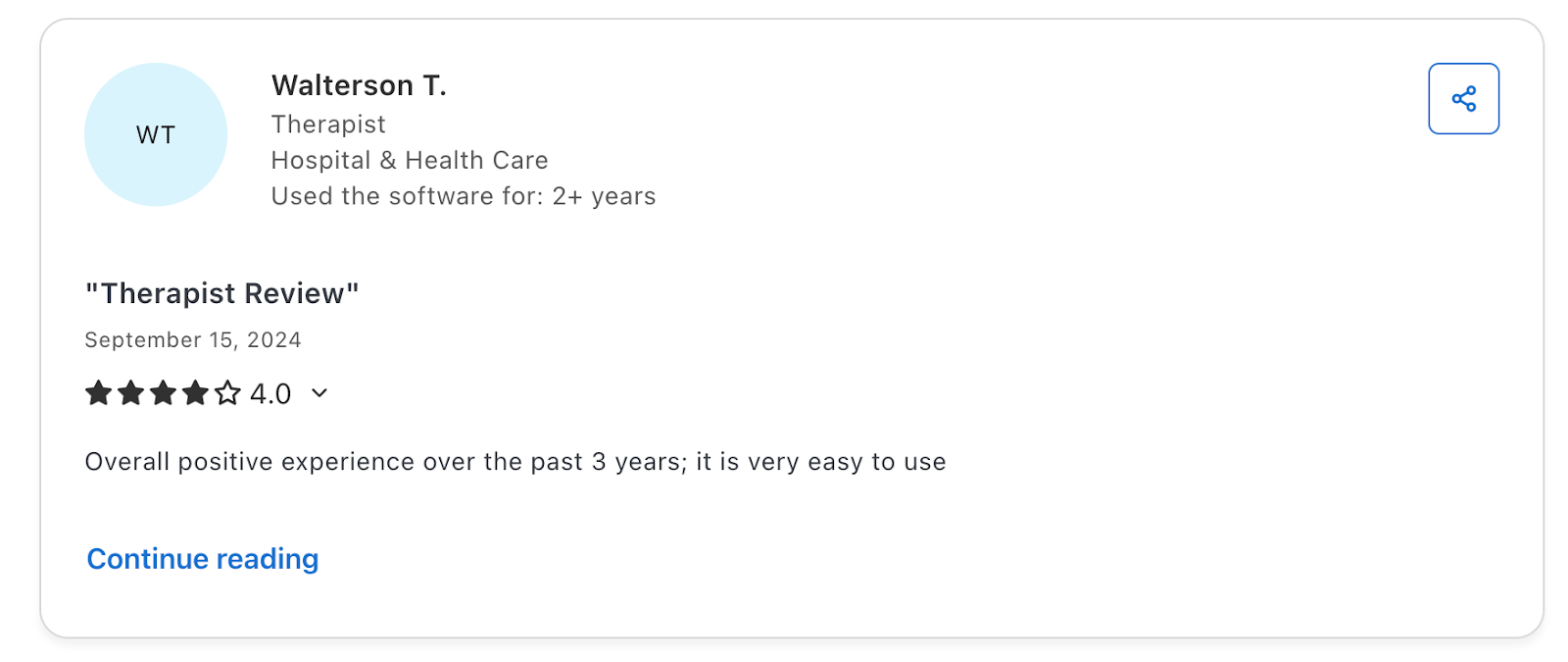
"I've been a user for over a decade, and TherapyNotes has supported the growth of my group practice seamlessly. The software is reliable, the features keep improving, and the customer support is unmatched." – Ashley W., Owner, Capterra
"The biggest reason I ultimately chose a different platform was because I wanted more freedom and flexibility with my documentation. The templates in TherapyNotes offered minimal customization and that was ultimately a dealbreaker for me." – Ceara C., Therapist, Capterra
Pricing
Solo clinicians pay $69/month. Group and enterprise practices start at $79/month for the first clinician, plus $50/month for every additional provider.
Bottom line
TherapyNotes works well for mental health counselors who need simple documentation. Growing practices or ABA providers will likely need stronger billing and supervision features.
7. SimplePractice: Best for solo clinicians starting out
What it does
SimplePractice is a practice management platform for small practices, with a straightforward setup process.
Who it's for
Solo clinicians or very small practices that need a basic system.
Key features
- Simple onboarding
- Client portal
- Built-in telehealth
Pros
✅ Easy to set up
✅ Clean, user-friendly design
Cons
❌Limited behavioral health compliance features
❌Not built for ABA or practices needing supervision tracking
❌Practices often outgrow it as they expand
What users say
"Out of all the private practice systems I tried via free trials, SimplePractice was the most comprehensive and user-friendly. The customizable templates and the scheduling system stand out." – Erin S., Psychologist, Capterra
"They consistently raise prices for their current customers at well above market increases and charge extra for very basic features that are included in other EHR's basic plans." – Kristel R., Owner/Therapist, Capterra
Pricing
Starting at $49/month per provider for an entry-level plan.
Bottom line
SimplePractice is a good fit for solo clinicians who need simplicity. Larger teams or ABA practices will likely hit its limits quickly.
How we tested these behavioral health EHR software tools
We watched demos, tested interfaces where possible, and reviewed user feedback from forums and review sites.
Our criteria focused on what matters for behavioral health workflows:
- Clinical workflow fit: Does the system support session-based documentation and treatment planning?
- Billing and documentation connection: Do session records flow into billing automatically, or does someone have to re-enter data?
- Supervision and compliance: Can you track supervision and pull audit-ready reports?
- Authorization tracking: Does the system flag authorization limits before you schedule?
- Learning curve: How long does it take before staff can use it confidently?
Platforms that required a lot of manual work or created disconnects between clinical and billing data ranked lower. Those that kept data connected and caught errors early ranked higher.
Which behavioral health EHR software should you choose?
When clinical documentation and billing live in separate systems, mistakes can slip through. A claim gets coded wrong. An authorization expires without anyone noticing.
In behavioral health billing, the margin for error is narrow. A missed authorization or a credential mismatch is often enough to get a claim denied.
The goal is finding software that fits how your practice actually works and puts you in control of the process from session to payment.
Passage Health makes sense if you:
- Run an ABA or behavioral health practice billing insurance
- Need supervision records tied to sessions and credentials
- Want scheduling, documentation, and billing connected
- Need to track authorizations before they run out
- Pull compliance reports regularly
A different platform could fit better if you:
- Need primary care or general medical features
- Run a community mental health center focused on case management
- Want a basic option for a solo therapy practice
- Need CCBHC-specific compliance tools
The final verdict
Many behavioral health EHR platforms started as general medical software with mental health features added on. That means ABA and therapy practices often have to force their workflows into systems that weren't designed for them.
Passage Health was designed the other way around, starting with ABA and behavioral health workflows first.
If your practice needs documentation, supervision, and billing to work together without constant manual fixes, Passage Health is the strongest option we reviewed.
Get started with Passage Health
Juggling separate systems for clinical notes, billing, and supervision tracking creates gaps where errors sneak through. One study found that entering documentation in multiple places causes delays and hurts care coordination.
Passage Health eliminates that problem by keeping everything connected.
- Session-to-billing automation: Document a session, and the billing record populates automatically with the right codes and credentials.
- Linked supervision records: Supervision logs attach to the sessions and staff they relate to, ready for audits.
- Authorization alerts: See how many hours remain during scheduling, not after a denial.
- On-demand reporting: Pull compliance and billing reports without assembling data from multiple sources.
The platform was built for ABA and behavioral health from the start, not adapted from hospital or primary care software.
Book a demo to see how Passage Health can help cut down on manual work for your staff and free up more time for client care.
Frequently asked questions
What is the best behavioral health EHR software?
The best behavioral health EHR software for ABA and therapy practices is Passage Health because it connects documentation, supervision, and billing in one system. This reduces errors and saves time for both clinicians and admin staff.
What does behavioral health EHR software do?
Behavioral health EHR software stores clinical records, session notes, treatment plans, and billing data in one place. It helps practices stay organized, meet compliance requirements, and coordinate care.
How does behavioral health EHR software reduce claim denials?
Behavioral health EHR software reduces claim denials by connecting session documentation to billing automatically. When credentials and authorization data are linked, common denial causes get caught before claims go out.
What features should I look for in behavioral health EHR software?
Features to look for in behavioral health EHR software include authorization tracking, billing tied to documentation, supervision tools, and reporting. These help prevent overbilling, reduce manual entry errors, and catch issues before claims are submitted.
Is behavioral health EHR software different from regular EHR?
Yes, behavioral health EHR software is different from regular EHR because it supports session-based documentation, supervision tracking, and behavioral health billing codes. General medical EHRs typically lack these features.
References
Cantata Health. (n.d.). Arize EHR. Retrieved from https://cantatahealth.com/arize-ehr/
Cifuentes, M., Davis, M., Fernald, D., et al. (2015). Electronic health record challenges, workarounds, and solutions observed in practices integrating behavioral health and primary care. Journal of the American Board of Family Medicine, 28(Suppl 1), S63-S72. Retrieved from https://www.jabfm.org/content/28/Supplement_1/S63
ICANotes. (n.d.). ICANotes. Retrieved from https://www.icanotes.com/
Moy, A. J., Hobensack, M., Marshall, K., et al. (2023). Understanding the perceived role of electronic health records and workflow fragmentation on clinician documentation burden in emergency departments. Journal of the American Medical Informatics Association, 30(5), 797-808. Retrieved from https://academic.oup.com/jamia/article/30/5/797/7076268
Passage Health. (n.d.). Passage Health. Retrieved from https://www.passagehealth.com/
Qualifacts. (n.d.). Qualifacts. Retrieved from https://www.qualifacts.com/
SimplePractice. (n.d.). SimplePractice. Retrieved from https://www.simplepractice.com/
TherapyNotes. (n.d.). TherapyNotes. Retrieved from https://www.therapynotes.com/
Valant. (n.d.). Valant. Retrieved from https://www.valant.io/
